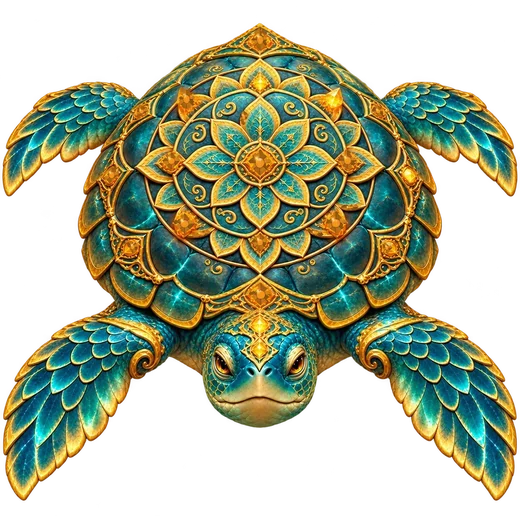
The tortoise avatar of Vishnu
Kurma: the tortoise avatar of Vishnu
कूर्म
Kurma is Vishnu in the form of a tortoise. When Mount Mandara, the churning rod, sinks into the Ocean of Milk, he dives beneath it and carries it on his back until the churning is done.
What Kurma does
Kurma has one task in the story and it is the one everything else depends on. The mountain has no footing in open water. He becomes its footing. The Bhagavata Purana describes his back as stretching a hundred thousand yojanas, like a great island, and says he felt the turning of the mountain as a pleasant scratching.
He does not fight, speak or take any of the treasures. Once the nectar rises, the text does not mention him again.
His name
Kurma is the Sanskrit word for tortoise. Kurmavatar, or Kurma avatar, means “the tortoise descent” of Vishnu. Other names used for him include Kachchhapa and Kamatha, both of which also mean tortoise.
The second of the ten avatars
In the best-known list of Vishnu’s ten avatars, the Dashavatara, Kurma is the second, after the fish Matsya and before the boar Varaha. See Kurma among the ten avatars.
Older than the Puranas
The tortoise is a sacred figure long before this story. The Shatapatha Brahmana says the creator Prajapati took the form of a tortoise to bring forth living beings. See Kurma in the Vedic texts.
How he is shown
Kurma is shown either as a tortoise, or as Vishnu with four arms and the lower body of a tortoise. In scenes of the churning he lies beneath the mountain with Vishnu also seated above it.
Worship
Temples to Kurma are rare. The best known is at Srikurmam in Andhra Pradesh. His appearance is remembered on Kurma Jayanti, the full moon of the month of Vaishakha. See temples of Kurma and Kurma Jayanti.
Source Bhagavata Purana 8.7.8–12
Appears in the story at The mountain sinks.